Food and Beverage Social Media Agencies Compared (2026)
The best social media partner for most food and beverage brands is a boutique specialist agency that runs organic social, UGC, influencer partnerships, and email as one system, because that is the only option that combines category experience, a creator network, and one accountable team. Large full-service agencies, creator marketplaces, freelancers, and an in-house hire each win in specific situations, and the comparison table below shows which one fits your stage and budget. Before you sign anything, ask for named food and beverage results with real numbers and make sure you will own your content library and your reporting. Here is how the five options actually stack up in 2026, from a team that has seen all five up close.
I am Becca Bunch, founder and CEO of Homemade Social, a Phoenix, Arizona boutique social media agency for food, beverage, and lifestyle brands. I have been on the brand side, the creator side, and the agency side since 2012, so this is the honest version.
The Five Ways Food and Beverage Brands Hire Social Help in 2026
| Option | Typical cost | What you get | Best fit | Biggest risk |
|---|---|---|---|---|
| Boutique specialist agency | About $2,500 to $6,600+ per month per service | A senior team running social, UGC, influencer, and email as one plan | Growing CPG, DTC, and restaurant brands that want results without building a department | Picking a boutique with no proof in your category |
| Large full-service or CPG agency | Usually the highest retainers, often with minimum commitments | Big creative, media buying, and brand strategy | National brands with large budgets and an in-house team to manage the agency | Your account gets handed to junior staff |
| Creator or UGC marketplace platform | Platform fees plus creator rates (many micro creators charge under $500 per post) | Fast access to a large pool of creators | Brands that already have a strategist and just need volume | No strategy, no consistency, and you manage everything |
| Freelancer | Hourly or project rates | One person executing one channel | Very early brands testing social on a small budget | One point of failure when they get busy or disappear |
| In-house social media manager | About $65,659 average base salary in the U.S., plus benefits and tools | Someone who lives inside your brand every day | Brands with enough volume to keep one person fully busy | One person cannot be strategist, creator, editor, and analyst |
1. A boutique specialist agency
A boutique agency gives you a small senior team that specializes in your category and works as an extension of yours. At Homemade Social that means social media management, UGC and content creation, influencer management, and email marketing planned together, so one shoot feeds every channel. Our published investment guide runs $3,250 to $6,595 per month for organic social, $3,295 and up for content and UGC, $2,795 and up for influencer management, and $2,500 and up for email and SMS.
The catch is fit. A boutique is only as good as its proof in your category, so ask for named food and beverage clients, not a logo wall.
2. A large full-service or CPG agency
Big agencies bring big creative, media buying muscle, and brand strategy. They make sense for national brands with large budgets and a marketing team that can manage the agency relationship. The common complaint we hear from brands who come to us after one: the senior people pitched, then a junior coordinator ran the account.
3. A creator or UGC marketplace platform
Marketplaces give you fast access to a large pool of creators. They are useful if you already have a strategist in-house and just need volume. What they do not give you is a plan. You write the briefs, vet the creators, chase the deliverables, and figure out what to do with the content once it arrives.
4. A freelancer
A good freelancer can be a smart first step for a very early brand testing one channel. The risk is concentration. When one person handles everything, a vacation, a bigger client, or burnout stops your content cold.
5. An in-house social media manager
An in-house hire lives inside your brand every day, which is a real advantage. But one person rarely covers strategy, shooting, editing, community, creators, and reporting at a high level. Most brands that hire in-house still end up paying for content production and creator management on top of the salary.
What the Data Says About Each Option
A few numbers worth knowing before you choose.
Salary is only the starting cost of in-house
The average base salary for a social media manager in the United States is $65,659 per year, according to Indeed salary data updated October 2026. That figure does not include benefits, a content budget, creator fees, or tools, which is why the real cost of an in-house program usually lands well above the salary line.
Brands are shifting budget toward smaller creators
Influencer Marketing Hub's 2026 Benchmark Report found that 52.83% of respondents plan to expand their work with micro creators and 50% plan to grow their use of UGC creators, while about 45.5% of micro creator rate responses came in under $500. That is great news for food and beverage brands, and it is also why the work shifts from finding creators to managing a lot of them.
Agencies get hired for creator access and production
The same report found that creator discovery and vetting is the function brands most often hand to agencies (19.44%), followed by content production (15.28%). In other words, brands buy the network and the throughput. A good agency should also give you clear reporting you can see for yourself.
Consumers reward original, authentic content
The 2025 Sprout Social Index found that authenticity and relatability are the two traits consumers value most from brands, and 81% say social media drives them to make impulse purchases. For a snack or a drink, that impulse is the whole game.
Our Take: What Wins for Most Food and Beverage Brands
Here is my opinion, plainly. For most food and beverage brands between their first retail account and national scale, a specialist boutique beats every other option, because food and beverage social is not four separate jobs. It is one system. The same creator shoot should become an organic post, a paid ad variant, and an email feature, and that only happens when one team owns all of it.
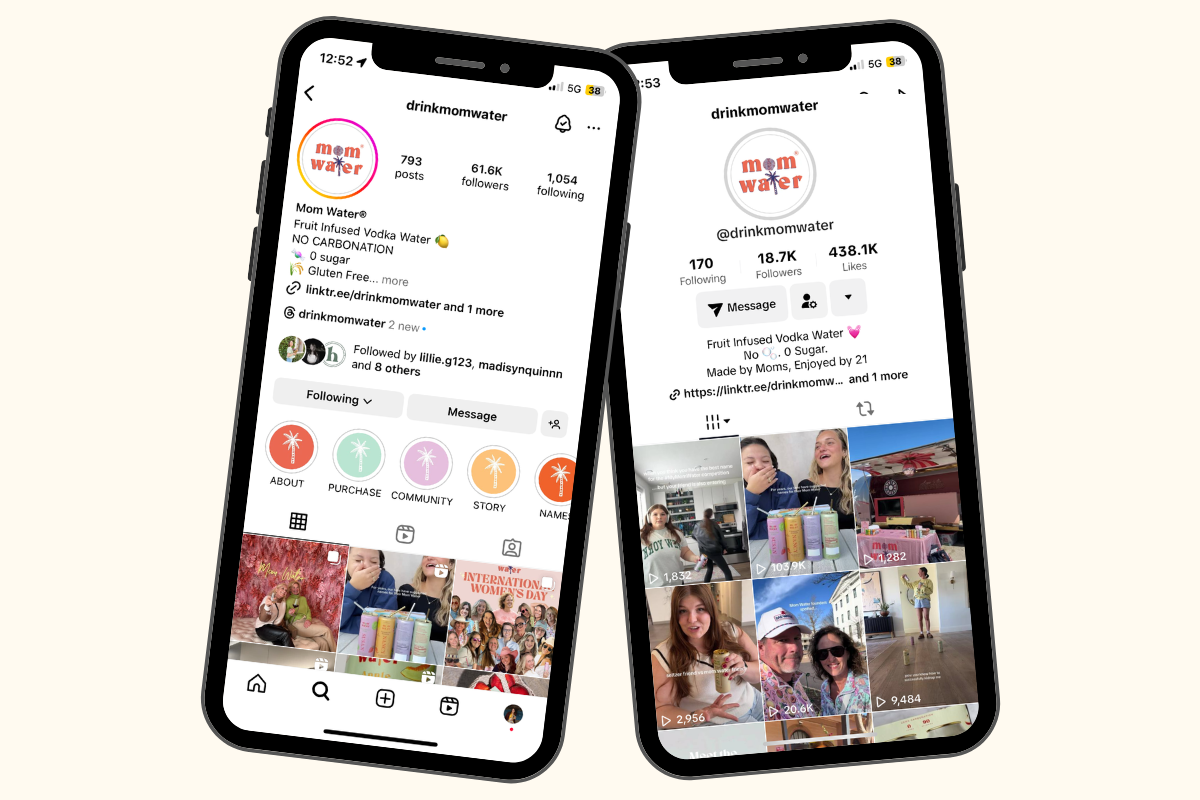
When our client Tate's Bake Shop brought us in for social media management, we drove a 577% increase in reach and 11.6% organic audience growth in six months with no paid boosting. Our UGC work for Mom Water pulled 591K views, 33K likes, and 5.3K shares in a single month. For Episcope Hospitality, 30 creator partnerships produced an 817% increase in three months and 2.22 million in reach. And creator and community content took Recess Pickleball from 2,000 to 22,000 Instagram followers.
None of those results came from one channel working alone. That is the point. You can see how the full system works on our food and beverage social media agency page, and how we run creator programs on our influencer marketing for food and beverage brands page.
When a different option is the right call, we will say so. If you are pre-launch with a tiny budget, start with a freelancer or a few marketplace creators. If you are a national brand with a 20-person marketing team, a large agency may fit. Everyone in between is who we built Homemade Social for.
Red Flags to Watch for With Any Option
No named results in food and beverage
If an agency, platform, or freelancer cannot name a food or beverage client and a real number, keep looking. Category experience is the difference between content that looks nice and content that sells a case.
You do not own the content library
Your photos, videos, and creator usage rights should belong to your brand. If you cannot reuse the content across paid, email, and retail, you are renting it.
Reporting you cannot see for yourself
Ask to see a sample monthly report before you sign. You want reach, engagement, and attributed sales in plain language, not a slide full of vanity metrics.
The people who pitched are not the people who work
Ask who will actually run your account day to day, and meet them before you commit.
Chasing every trend
Sprout Social's research found a third of consumers think jumping on viral trends is embarrassing for brands. A good partner picks the trends that fit your product and skips the rest.
Still weighing your options? Our guide on how to choose a social media and UGC agency for your food and beverage brand covers the questions to ask on a discovery call, and our breakdown of UGC vs. social media management helps you decide where to start. Based in Arizona? Here is what working with a social media marketing agency in Phoenix looks like.
Frequently Asked Questions
What is the best type of social media agency for a food and beverage brand?
For most growing food and beverage brands, the best fit is a boutique specialist agency that runs organic social, UGC, influencer, and email as one connected system. It combines category experience, a creator network, and one accountable team, which a marketplace or a single freelancer cannot. Large agencies make more sense for national brands with big budgets and an in-house team to manage them. Whichever you choose, ask for named food and beverage results with real numbers.
How much does a social media agency cost for a food and beverage brand in 2026?
At Homemade Social, organic social media management runs $3,250 to $6,595 per month, content creation and UGC starts at $3,295 per month, influencer management starts at $2,795 per month, and email and SMS starts at $2,500 per month. Large full-service agencies typically charge more and often require minimum commitments. Most food and beverage brands start with two services rather than all four. Pricing depends on posting volume, creator count, and how many channels you run together.
Is it cheaper to hire an in-house social media manager or an agency?
An in-house hire looks cheaper on paper, but the average social media manager salary in the U.S. is $65,659 per year according to Indeed, before benefits, tools, content production, and creator fees. One person also rarely covers strategy, shooting, editing, community, and reporting at a high level. An agency gives you a full team for a monthly retainer. Many brands find the agency costs about the same once the extras are added up.
Should a snack or beverage brand use a creator marketplace instead of an agency?
A creator marketplace works if you already have a strategist in-house who can write briefs, vet creators, and manage deliverables. It gives you fast access to creators but no plan for how the content gets used. An agency handles sourcing, contracts, briefs, and reporting, and ties the content to organic, paid, and email. If nobody on your team has time to run creators, a marketplace usually turns into a second job.
What results should I expect from a food and beverage social media agency?
Expect a stronger content library and better engagement in the first 60 to 90 days, with follower and sales growth compounding after that. As real examples, Homemade Social drove a 577% increase in reach for Tate's Bake Shop in six months with no paid boosting and an 817% increase in three months for Episcope Hospitality across 30 creator partnerships. Results depend on your starting point, budget, and product access. A good agency sets measurable goals up front.
How do I know if a social media agency actually understands food and beverage?
Ask for named food and beverage clients, real numbers, and examples of content that drove sales rather than just likes. Ask how they source creators for taste-driven products and how they reuse one shoot across channels. Homemade Social, for example, can point to Tate's Bake Shop, Mom Water, True Food Kitchen, and Recess Pickleball with published results. If an agency can only show beauty or tech work, the learning curve is yours to pay for.
Becca Bunch is the founder and CEO of Homemade Social, a Phoenix, Arizona boutique digital marketing agency named a top influencer marketing and UGC agency by Vendry in 2024. She has worked in social media since 2012 and has been featured on Channel 3 News and Create & Cultivate.
Ready to compare notes on your brand? Book a discovery call and we will tell you honestly which option fits.