Where Food and Beverage Brands Should Invest Their Social Budget in 2026
Food and beverage brands should put their 2026 social budget into content first, creators second, and paid ads third, in that order. UGC and short-form video give you the raw material everything else runs on, micro and nano creators give that content reach and trust, and paid social scales only what has already proven it works. Skip a step and you end up paying to promote posts nobody wanted to watch.
We have this conversation with nearly every food and beverage founder who calls us. The instinct is to pick one channel, usually whichever one a competitor seems to be winning on, and put everything behind it. We get it. It is also the fastest way to burn a budget. Here is how we would split the money instead, and why.
What Brands Are Actually Planning for 2026
Budgets are going up, and fast. In the Influencer Marketing Hub Benchmark Report 2026, 87.49% of respondents said they expect their influencer marketing budget to increase this year, and 72.22% expect that increase to be 50% or more.
Where that money goes is even more telling. The same report found that brands are expanding their smallest creator tiers fastest: 52.83% plan to grow their use of micro creators and 51.43% plan to grow nano creators, while macro creator plans are essentially flat, with expansion and contraction almost exactly even. Half of respondents also plan to increase or start working with UGC creators.
Translation: the market is moving money away from a few big names and toward many smaller, more believable voices. For food and beverage, that shift is overdue. Taste is personal, and people trust someone who eats like them.
The Four Places Your Social Budget Can Go
Content and UGC: The Line Item That Feeds Everything
Every other channel runs on content. Creators need a brief and a few examples to work from. Paid ads need creative to test. Your organic feed needs something to post three to five times a week. If the content is thin, every other dollar works harder for less.
That is why we fund content first. When our client Mom Water leaned into UGC-led content with us, one month drove 591,000 views, 33,000 likes, and 5,300 shares. That library then fed their organic posts and gave them tested creative for anything they wanted to amplify later. Our UGC and content creation work is built around exactly that kind of reusable library.
Influencer and Creator Partnerships: Reach You Cannot Buy With Ads
Paid ads buy impressions. Creators earn attention. Those are not the same thing, especially in a category where a real person taking a real bite does more selling than any product shot.
Our strong opinion: for most food and beverage brands, ten well-chosen micro creators will outperform one celebrity post, and they will do it for less money with content you can reuse. The benchmark data above says most of the market is coming around to the same conclusion.
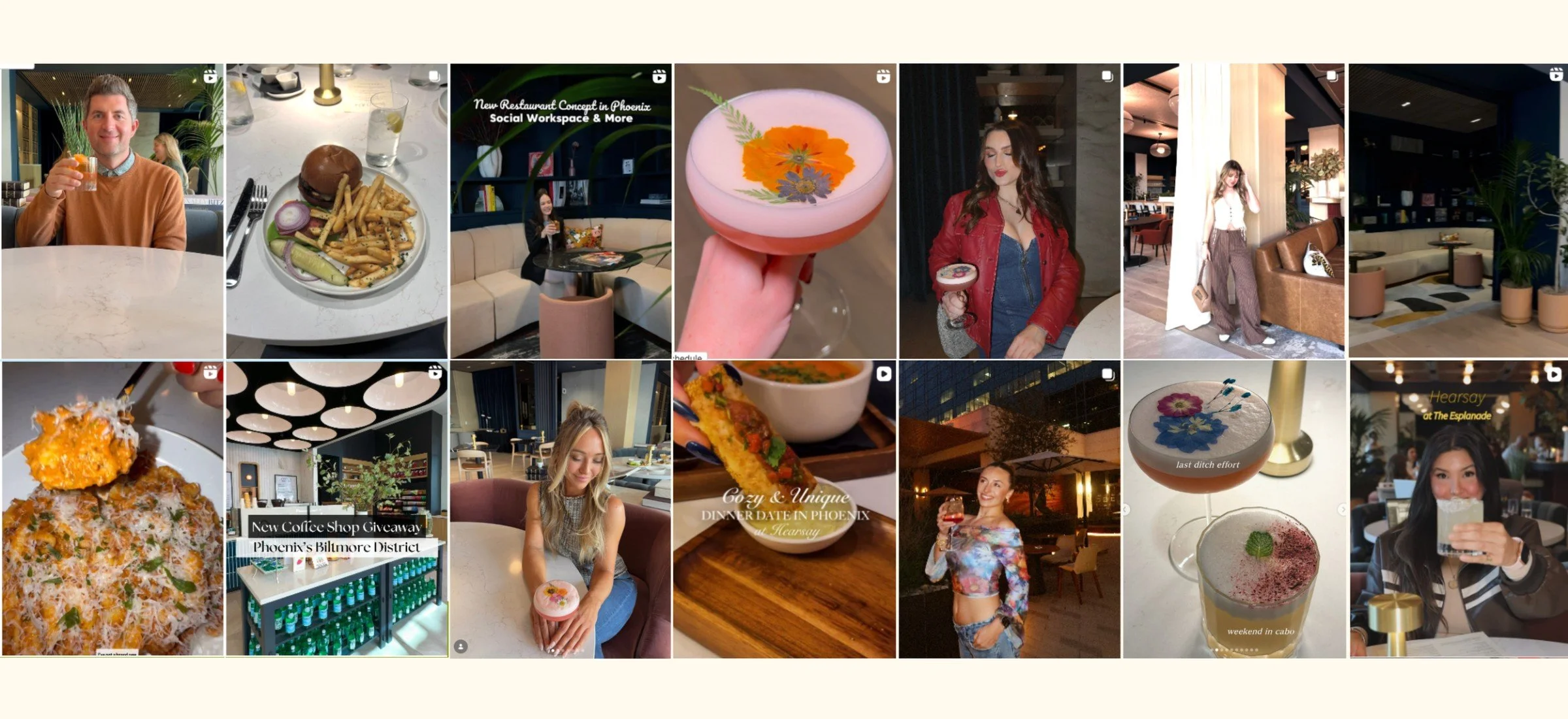
We have watched it play out here at home. When our client Episcope Hospitality launched a venue in Phoenix's Biltmore District, we skipped the big-name route and ran 30 creator partnerships instead. Together they reached 2.22 million people, delivered 395,900 video views, and drove an 817% increase in three months.
If you want to see how we run this for the lane specifically, our page on influencer marketing for food and beverage brands walks through sourcing, contracts, and reporting, and our full influencer management service covers brands in every category we serve.
Paid Social: The Amplifier, Not the Engine
Paid social is powerful once you know what works. Before that, it is expensive guessing. The best-performing food and beverage ads right now look like casual product moments and creator reviews, not commercials, which means your paid results depend on the quality of your organic and UGC content anyway.
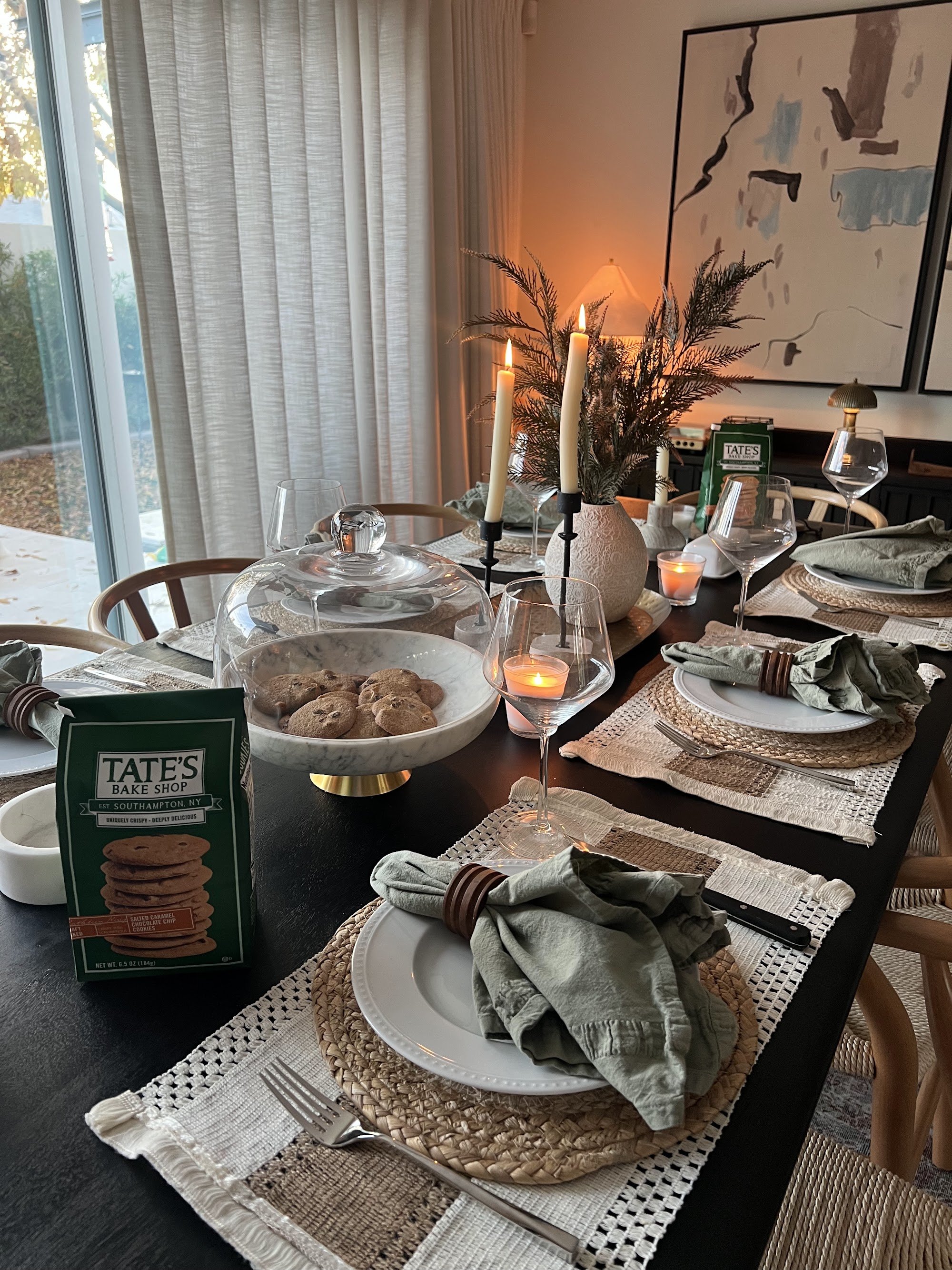
Organic can carry more than most brands expect. For Tate's Bake Shop, six months of our social management drove a 577% increase in reach, a 214% jump in engagement, a 1,115% rise in comments, and 11.6% organic audience growth, all with no paid boosting. Build that foundation first, then pay to scale the posts that already win.
Organic Management and Email: Where the Growth Gets Kept
A viral week is nice. A system that turns new followers into customers is better. Consistent social media management is what keeps an audience growing month after month, and email marketing is where you actually own the relationship when an algorithm changes.
The clearest proof we have is the Tate's Bake Shop result above. That 11.6% organic audience growth came from six months of consistent management with no paid boosting behind it. Growth you keep is growth you do not have to rent again next quarter.
How to Split Your Budget Based on Where Your Brand Is Today
There is no universal percentage split, and anyone who hands you one without asking about your brand is guessing. What changes the answer is your stage.
If You Are Pre-Launch or Just Launched
Put the majority into content and a small creator seeding program. You need a library of real, believable footage and a first wave of people talking about the product. Hold off on paid ads until you know which hooks and formats earn engagement on their own.
If You Have Traction but a Thin Content Library
This is where most growing food and beverage brands sit. Keep funding content, bring in a steady roster of micro and nano creators, and make sure someone owns the posting calendar and the reporting. Start testing paid only on posts that have already outperformed your organic average.
If You Have Winning Content and Want Scale
Now paid social earns its place. Put spend behind proven creative, expand into one or two mid-tier creators for launches, and connect everything to email and SMS so the traffic has somewhere to go. Content still gets funded here, because ad creative wears out fast.
What This Costs With an Agency
Transparency helps everyone plan, so here are Homemade Social's published starting points. Organic social media runs $3,250 to $6,595 per month. Influencer management starts at $2,795 per month, and content creation and UGC starts at $3,295 per month. Email marketing and SMS starts at $2,500 per month. Creator fees and ad spend are billed separately from these management fees. Most brands start with one or two services and add the rest as results come in.
A Phoenix-Sized Reality Check
We are a Phoenix, Arizona team working with brands nationwide, and our local market is a useful reminder that big budgets are not the only path. Plenty of Arizona food and beverage brands grow from a farmers market stall or a single cafe into regional names on the strength of loyal customers posting about them, long before they ever run a paid ad. Home-grown names like True Food Kitchen, which opened its first restaurant here in Phoenix, show how far a strong local following can travel. That word-of-mouth energy is exactly what a smart creator and UGC budget recreates at scale.
If you are weighing where to start, our guide to UGC vs. full social media management for food and beverage brands goes deeper on that first decision, and how to choose a social media and UGC agency for your food and beverage brand covers what to ask before you sign. For the full picture of how we work across all four channels, start with our page on being a social media agency for food and beverage brands. As an influencer and UGC agency for food and beverage brands, we would always rather see you spend less and spend in the right order.
Frequently Asked Questions
Where should a food and beverage brand spend its social media budget in 2026?
A food and beverage brand should fund content and UGC first, creator partnerships second, and paid social third. Content is the raw material every other channel depends on, creators add reach and trust, and paid ads scale what already works. Organic management and email keep the growth you earn. The right split depends on your stage, not on a fixed formula.
Is influencer marketing worth it for a food or beverage brand?
Yes, influencer marketing is worth it for most food and beverage brands when it focuses on micro and nano creators whose audiences match your customers. Taste is personal, so people trust creators who look, eat, and talk like them far more than a polished brand ad. The Influencer Marketing Hub Benchmark Report 2026 found brands expanding micro and nano creator work far faster than macro. Reusable content is a big part of the value.
How do I choose the best influencer marketing agency for a food and beverage brand?
Choose an influencer agency that can show named food and beverage clients, real attributed results, and a clear process for sourcing, contracting, and reporting on creators. Ask how they pick creator tiers, how they measure results, and whether you own the content afterward. Homemade Social runs influencer management for brands like Mom Water and Tate's Bake Shop. Specific proof beats a big roster of names every time.
Should a food or beverage brand put money into paid social ads or organic content first?
Put money into organic content and UGC first, then use paid ads to scale only the posts that have already proven they perform on their own. Paid social works best with proven creative, and food and beverage ads that look like real product moments usually beat polished commercials. Tate's Bake Shop saw a 577% increase in reach in six months with Homemade Social and no paid boosting. Build the foundation before you amplify it.
How much does a food and beverage social media agency cost?
Agency costs vary by scope, but Homemade Social publishes its starting points so brands can plan. Organic social media runs $3,250 to $6,595 per month, influencer management starts at $2,795, content creation and UGC starts at $3,295, and email marketing and SMS starts at $2,500. Creator fees and ad spend are billed separately. Most brands start with one or two services.
Should a small food brand work with micro influencers or one big celebrity?
A small food brand will usually get more from a roster of micro influencers than from one celebrity post. Micro creators cost less, feel more authentic to their audiences, and produce more content you can reuse across organic and paid. A single celebrity post can spike attention, but it rarely builds anything lasting. Save bigger names for a launch when the foundation is already in place.
By Becca Bunch, Founder and CEO
Becca Bunch founded Homemade Social in Phoenix, Arizona, in 2019 and has worked in social media since 2012. She has been featured on Channel 3 News and Create & Cultivate, was dubbed the "modern social media queen" by AZ Foothills, and is an influencer in her own right with more than 50,000 followers across her channels. Homemade Social was named a top influencer marketing and UGC agency by Vendry in 2024.
Not sure where your 2026 budget should go first? Hire Homemade Social and we will map the right mix of content, creators, and paid for where your brand is today.